RPA Is More Than Automation: A Lever for Business Growth and Team Motivation.
April 27, 2026
Protected: InovaPrime achieves ISO/IEC 27001:2022 certification and completes SOC® 2 Type II report
October 6, 2026RPA Is More Than Automation: A Lever for Business Growth and Team Motivation.
April 27, 2026Protected: InovaPrime achieves ISO/IEC 27001:2022 certification and completes SOC® 2 Type II report
October 6, 2026Robotic Process Automation
RPA at scale: Why governance is a differentiator
By Marco Batista | 12/ May/ 2026

There is a simple question most leadership teams should ask more often. Why are we still spending time and budget on work that can be executed consistently, securely, and in full alignment with business, without interruptions?
The answer is rarely “because it cannot be automated.” More often, it is because the organization has not created the conditions to automate at scale. And that is the real point. RPA is not just a productivity tool. With the right structure, it becomes a lever for growth, operational reliability, and an efficient way of working for teams, allowing them to focus on more high value tasks.
Automation and AI have moved beyond trend status. They are now part of how organizations protect competitiveness. But successful automation is not a collection of isolated scripts or bots. It is a coherent approach that can scale, stay compliant, and remain maintainable over time. Without that coherence, automation quickly becomes fragmented, hard to govern, and expensive to sustain.
The hidden cost is not only time, it is operational friction
In every sector, organizations are facing the same pressures: scarce specialized resources, increasing complexity, and rising expectations for accuracy and speed. Repetitive manual work has a cost that rarely appears in a budget line. It shows up in delays, rework, inconsistent outcomes, and the gradual erosion of motivation.
This is why automation has become closely tied to talent retention. When teams spend their days on low impact repetitive tasks, the best people disengage or leave. When routine execution is handled by automation, teams regain time for work that improves the business: analysis, exception handling, customer support, process improvement, and better decision support.
RPA alone will not solve organizational challenges. It is not a silver bullet. But it can change the operating rhythm of a business when implemented with method and accountability.
What separates successful automation from expensive disappointment
In practice, the difference between success and disappointment is rarely the tool. It is the operating model behind it.
Automation initiatives tend to fail or stall when:
- Processes are not stable enough, or no one can explain the real end to end workflow.
- Exceptions are frequent, undocumented, and handled through informal workarounds.
- Business rules are unclear, changing, or owned by “everyone and no one”.
- There is no governance for change control, bot maintenance, and auditability.
- Automation is built in silos, with no visibility of what is running where and why.
Automation works when an organization brings clarity first. That clarity includes ownership, measurable outcomes, rule definition, and a practical governance model that supports scale.
This is also where Business Process Management (BPM) matters, not as a tool category, but as discipline.
BPM provides structure, RPA provides execution
BPM is the discipline that makes process visible, governable, and measurable. It aligns workflows with strategic goals, assigns ownership, defines controls, and enables continuous improvement. It creates a shared language across teams, which is essential when processes cross departments, systems, and compliance boundaries.
RPA then becomes the execution layer for specific tasks that are repetitive, rules based, and high volume. It is particularly valuable because it can operate through existing user interfaces, which often accelerates delivery in environments where legacy systems are difficult to change.
A practical way to look at it is:
- BPM clarifies and orchestrates the end-to-end flow.
- RPA executes repeatable tasks with speed and consistency.
- Governance ensures alignment with business goals, control, traceability, and maintainability as the automation footprint grows.
This approach avoids a common trap: automating a poorly defined process does not create efficiency, it scales inefficiency and also risk.
RPA is software, and its success depends on how it is governed
RPA is a type of software that mimics human actions within a process, executing repetitive work faster and more consistently, and freeing people to focus on tasks that require judgement and interaction. (1)
This sounds simple, and it can be, but only when the right boundaries are set.
RPA tends to perform best when:
- The task is rules based and inputs can be validated.
- Exceptions can be routed to humans through a defined workflow.
- There is sufficient volume to justify automation effort.
- A clear owner exists for both the process and the automation artefact.
- Change is controlled, tested, and monitored.
And RPA needs operational ownership. Interfaces change. Rules evolve. Data quality issues surface. This is why governance is not an add on. It is the foundation that keeps automation reliable and scalable.
Governance and compliance are not constraints, they enable scale
For many leadership teams, especially in finance, public sector, and telecom, the question is not “can we automate?” It is “can we automate without increasing risk?”
This is where governed automation becomes a competitive advantage. When automation is traceable, auditable, and consistently aligned with policies, organizations gain speed with confidence. They reduce the variability that leads to compliance gaps and operational incidents.
A few examples illustrate how this plays out in real operations:
- Finance Reconciliations, validations across multiple systems, routine controls, and evidence collection often consume large volumes of analyst time. Governed automation helps ensure rules are executed consistently and produces audit ready traces without relying on manual screenshots and spreadsheets.
- Public sector Processes that require transparency, clear approvals, and accountability benefit from workflows that are both orchestrated and traceable. Automation can speed up execution, but governance ensures the decision trail and compliance with procedures remain intact.
- Telecom High volume operations often rely on multiple platforms and frequent updates. Automating repetitive tasks such as data synchronization, service activation back-office steps, or routine validation checks reduces cycle time and errors, but only a governed model keeps that automation reliable when systems and interfaces change.
These are not “nice to have” improvements. They are the kind of operational consistency that makes performance predictable and manageable.
AI and agentic automation are the horizon, but the foundation is built now
AI and more advanced automation models are expanding what can be automated, especially around unstructured data and decision support. That is clearly where the market is heading. But most organizations will only benefit from that horizon if they build a disciplined foundation today: structured processes, clear rule ownership, measurable outcomes, and governance that can scale.
In other words, tomorrow’s intelligent operations require today’s process clarity.
A practical position: reduce friction, increase control, protect capacity
From what we see across organizations, the most sustainable approach is to avoid treating RPA as a standalone initiative. The operating model that scales is integrated. It connects process orchestration, task execution, and governance in a single coherent layer, so automation is not only fast, but controlled, measurable, and maintainable.
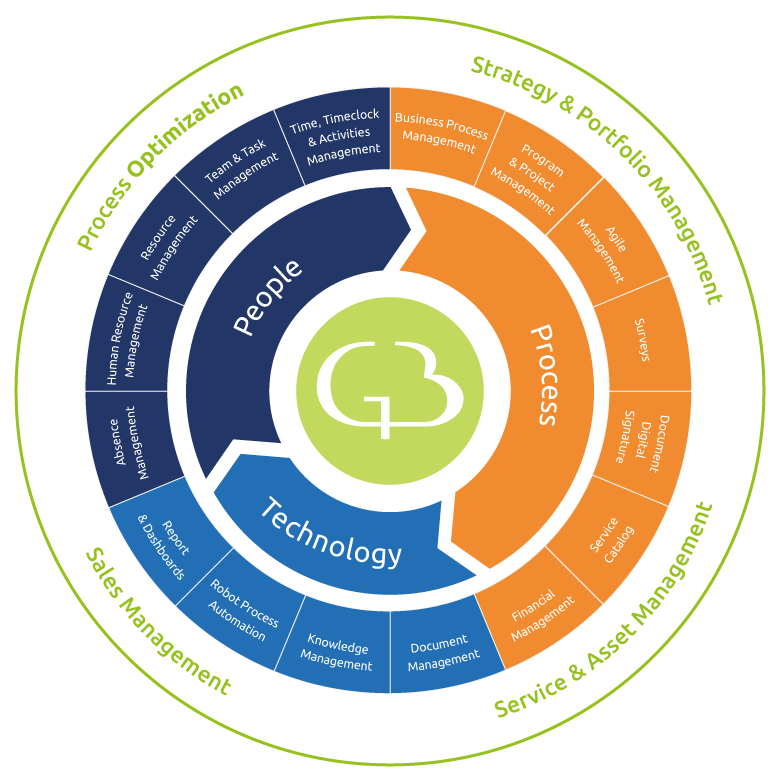
That is also the logic behind how Governance.Business evolves: combining BPM and governance discipline with task automation so organizations can scale execution without losing visibility, control, or compliance.
If your organization is looking to move beyond fragmented automation and build a governed model that can scale, it is worth having a conversation about the approach, not just the tooling.
Reference
(1) McKinsey, “The value of robotic process automation”.
ONE PLATFORM
We invite you to discover Governance.Business!

It is an end-to-end business management solution. What is it?
Governance.Business is designed to simplify running your organization in a day to day. It provides multiple functionalities that enable you to focus on analyzing, planning, executing, and controlling your business strategy and operations. Click here to discover all the details about our platform or request a demo with our team.